Audio and Video Solutions in India
Advanced Audio Video Solutions for Modern Workspaces
What Are Audio And Video Solutions
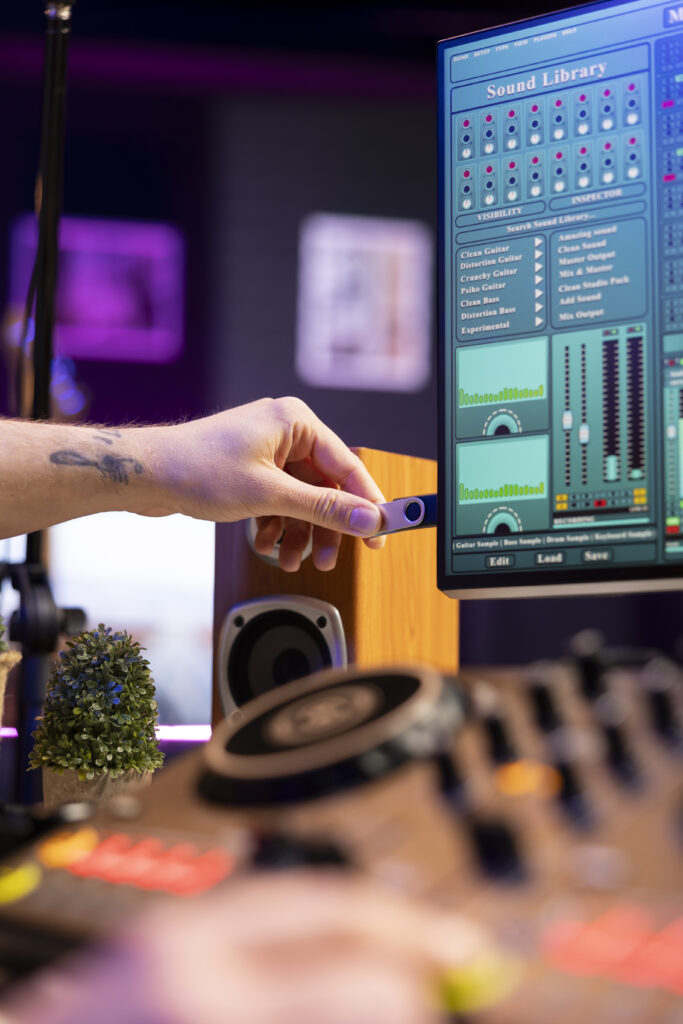
We design, integrate, and maintain advanced audio and video systems for commercial and institutional environments where communication and engagement are critical. Through intelligent system design, high-performance equipment, and seamless integration, our solutions deliver immersive experiences, reliable operation, and intuitive control across modern spaces.
- High-performance audio with balanced acoustics and clarity
- Advanced visual systems for impactful communication
- Centralized control with seamless system integration
Our Capabilities
Integrated Audio Systems
Engineered sound solutions that provide exceptional clarity, balanced acoustics, and consistent coverage across boardrooms, auditoriums, and large venues.
Advanced Visual Technologies
High-impact display solutions including LED video walls, projection systems, and digital signage designed to captivate and communicate effectively.
End-to-End AV Integration
Seamless integration of audio, video, and control systems into a unified platform—delivering intuitive operation and optimized performance.
Enterprise Collaboration Solutions
Next-generation video conferencing and unified communication systems enabling seamless connectivity and productivity in modern workplaces.
Lifecycle Support & Maintenance
Proactive maintenance and dedicated technical support to ensure long-term reliability and uninterrupted system performance.
What We Deliver
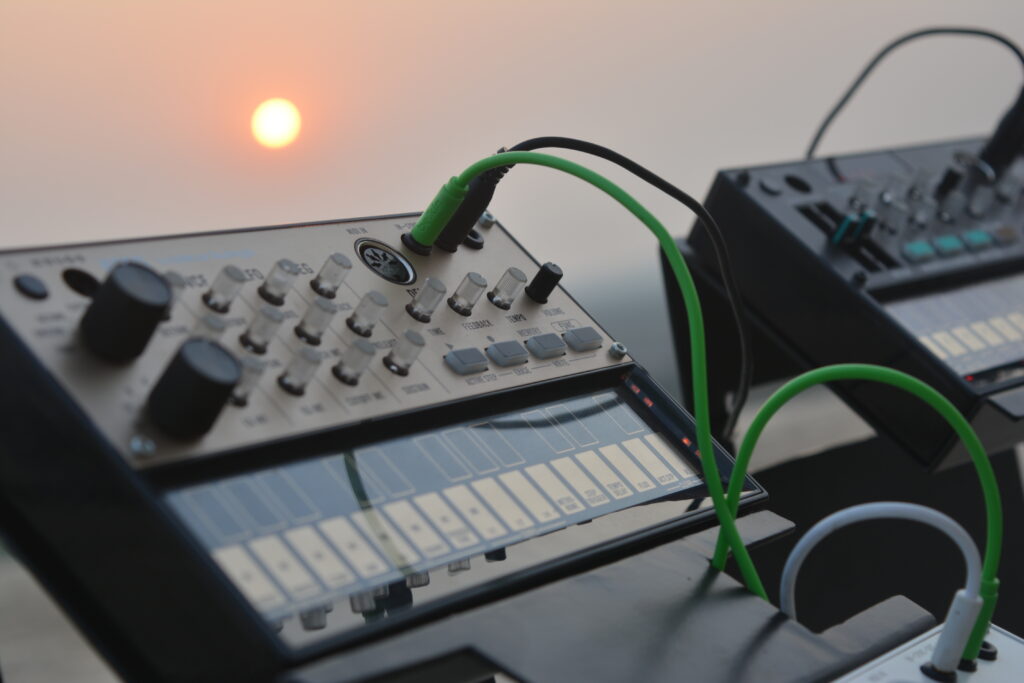
Integrated Audio Systems
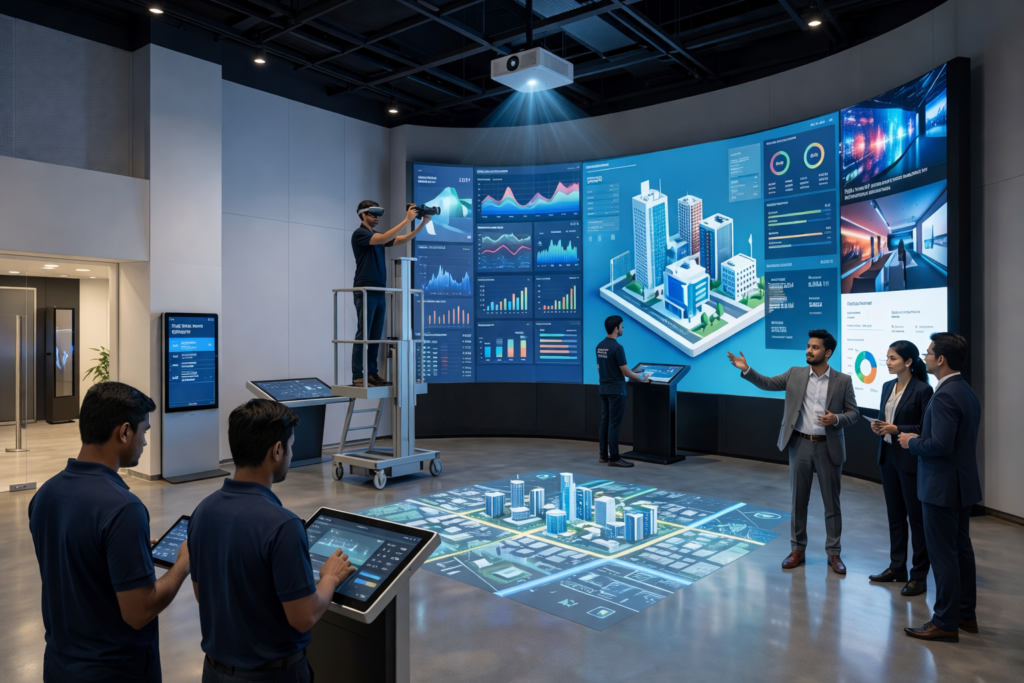
Advanced Visual Technologies
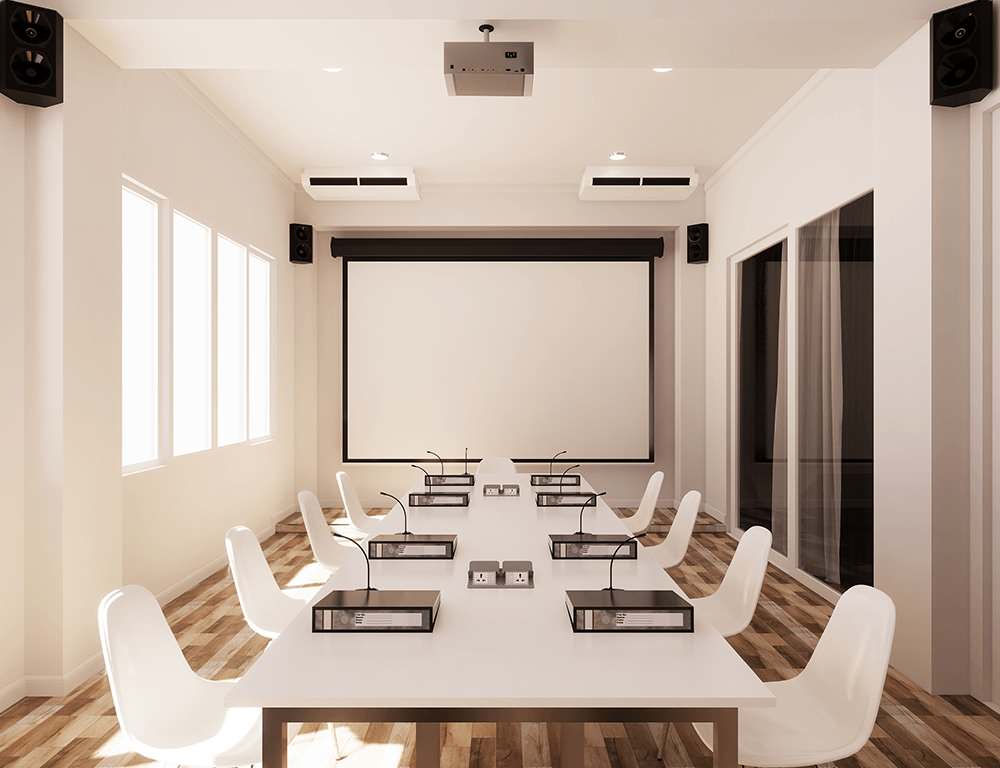
AV System Integration
Collaboration & Conferencing Solutions
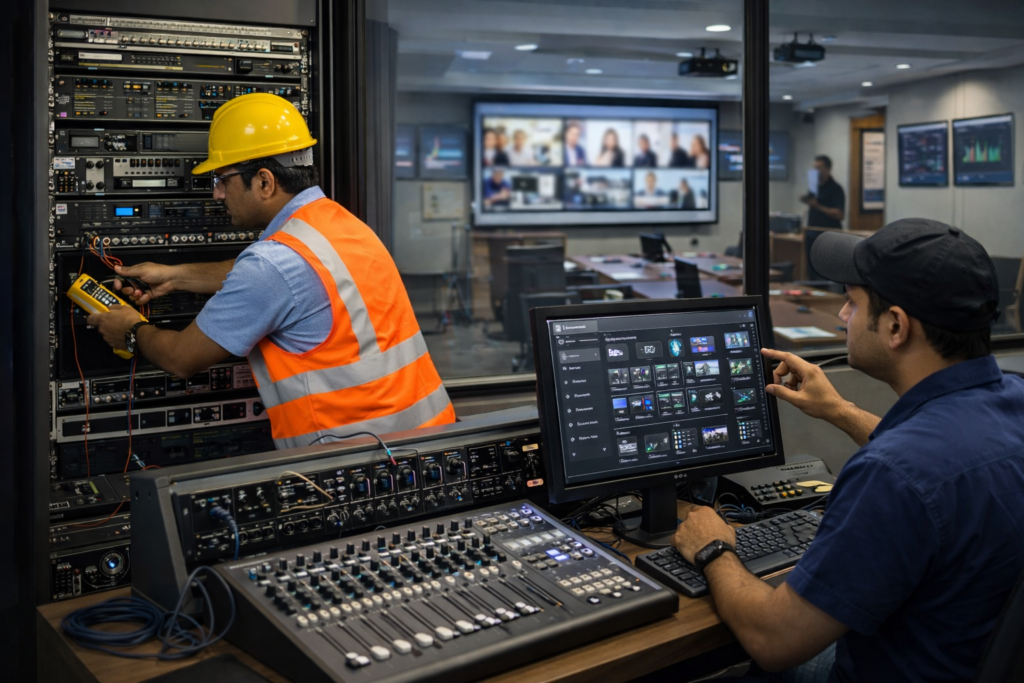
Lifecycle Support & Maintenance

Fire & Life Safety Syncing
Open-Protocol
Vendor-Neutral
Cloud or On-Premise
Real-Time Analytics
AV Impact Scenarios
Scenario 1: Corporate Office
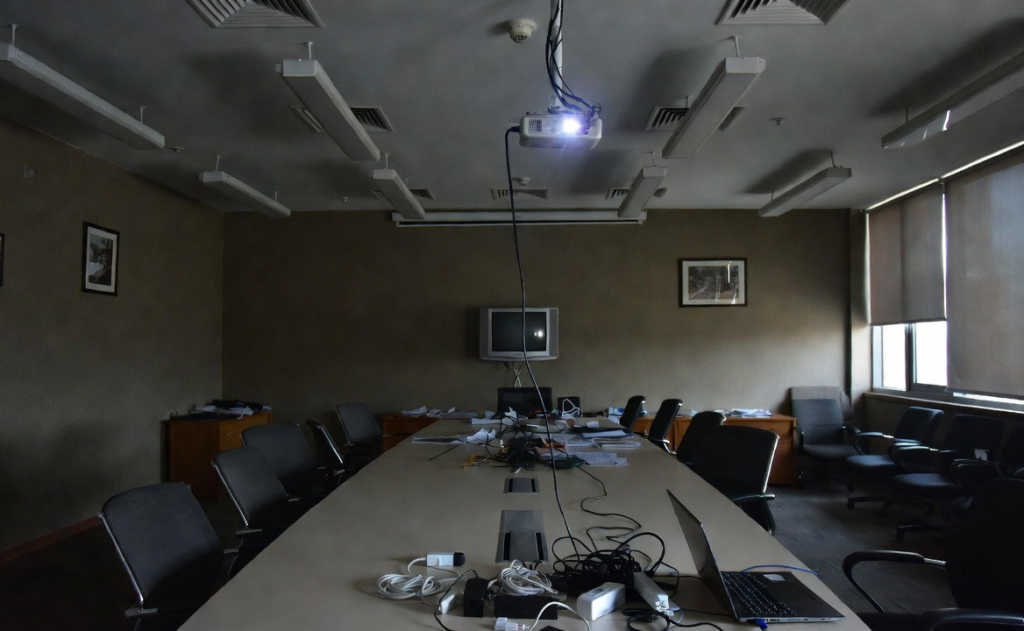
Before State
- Poor audio quality in meeting rooms
- Disconnected video conferencing systems
- Manual setup for presentations
- Inconsistent user experience across rooms
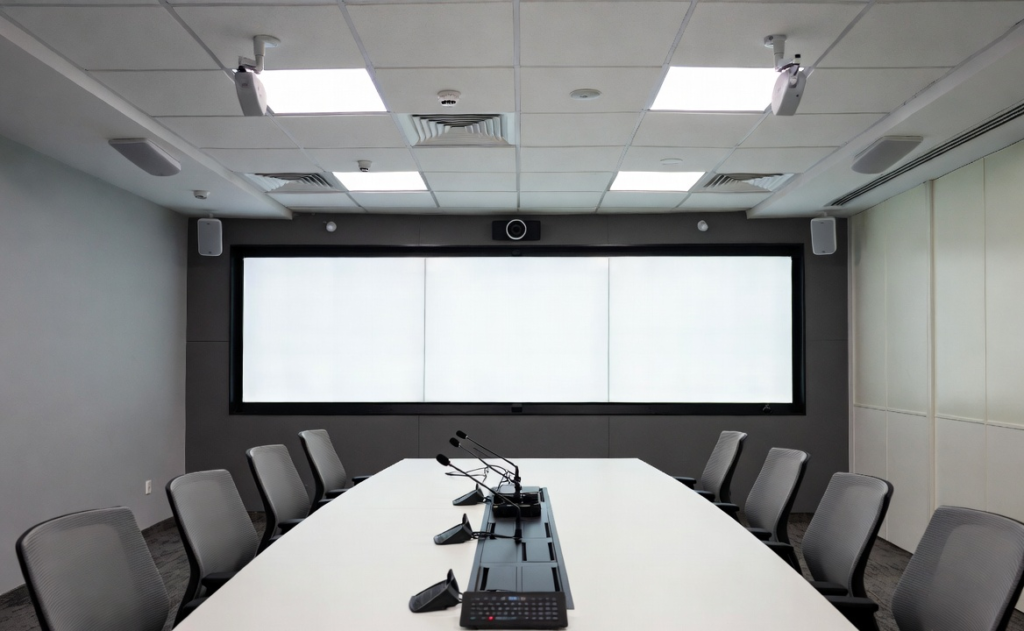
After State
- Crystal-clear audio with uniform coverage
- Integrated video conferencing and display systems
- One-touch control for meetings and presentations
- Standardized AV experience across all rooms
Result
Enhanced communication experience
25-30%
improvement in user engagement
Scenario 2: Auditorium / Event Space
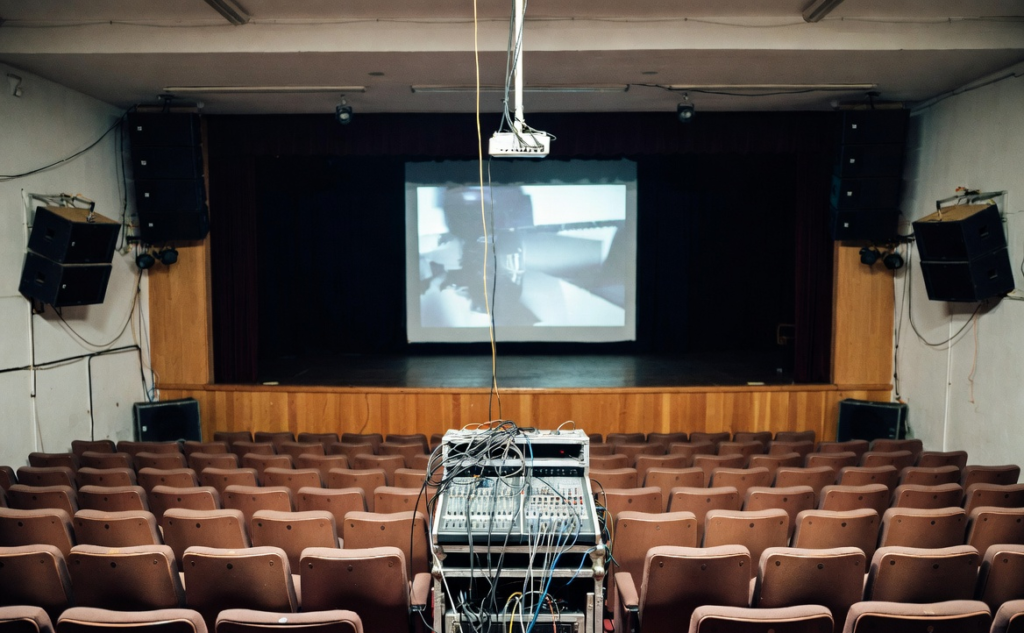
Before State
- Uneven sound distribution across the venue
- Low-quality projection and visibility issues
- Complex manual system operations
- Frequent technical disruptions during events
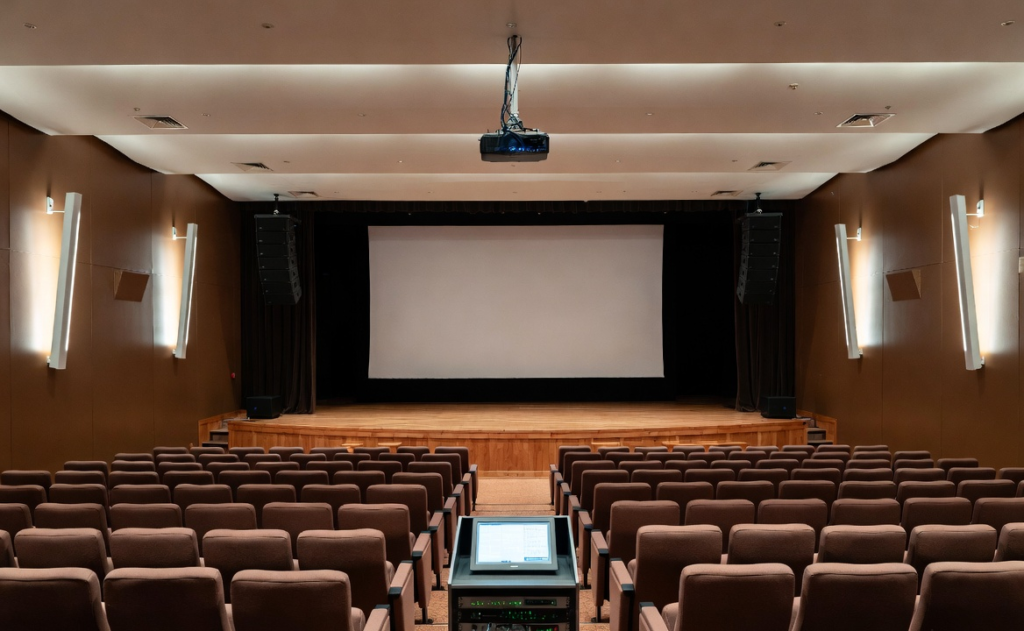
After State
- Balanced, high-quality audio coverage throughout
- High-definition displays and projection systems
- Centralized AV control for simplified operation
- Reliable performance for uninterrupted events
Result
Immersive Audience experience
35-50%
Reliable Event execution
Industries We Serve
Corporate Offices
Educational Institutions
Hospitality & Event Venues
Retail & Commercial Spaces
Healthcare Facilities
Government & Public Facilities
Industrial & Manufacturing
Pharmaceutical Facilities
Banking & Financial Services
Audio-Video System Specification
| Facility Type | AV Priority | System Type | Usage Requirement |
|---|---|---|---|
| Office | Meeting Rooms | Video Conferencing + Displays | Daily Use |
| Retail | Customer Engagement | Digital Signage | Continuous |
| Auditorium | Sound + Visual Impact | PA System + Projection | Event-Based |
| Hospital | Communication Systems | Displays + Paging | 24/7 |
| Hospitality | Guest Experience | Integrated AV Systems | Scheduled |
Our Audio and Video System Process

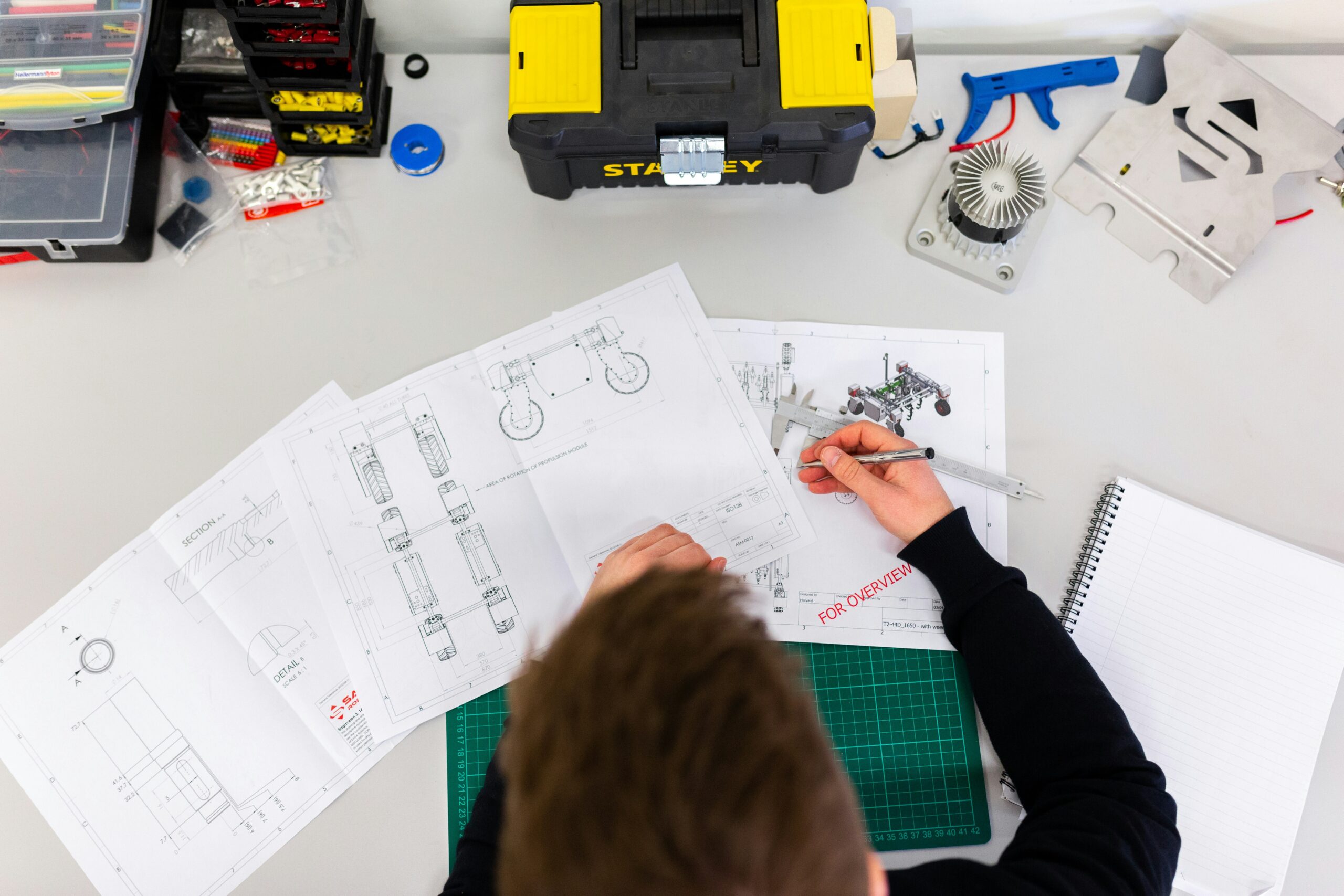
Facility Assessment
Site evaluation and system audit to understand infrastructure, energy usage, and readiness.
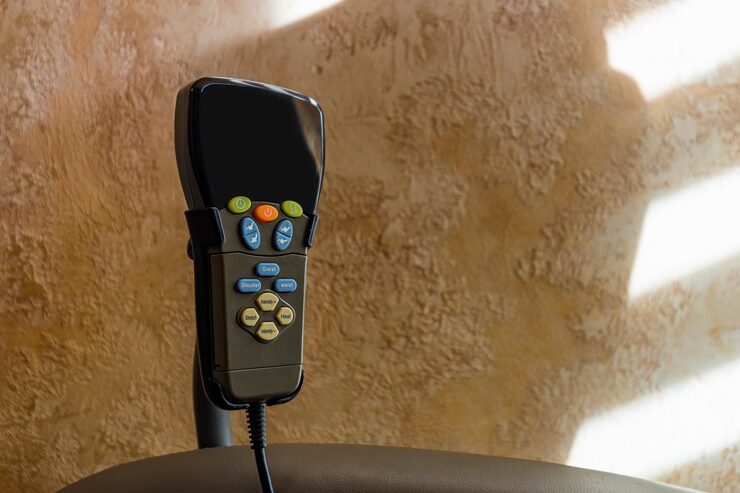
System Design
Integration architecture and automation logic tailored to operational goals.
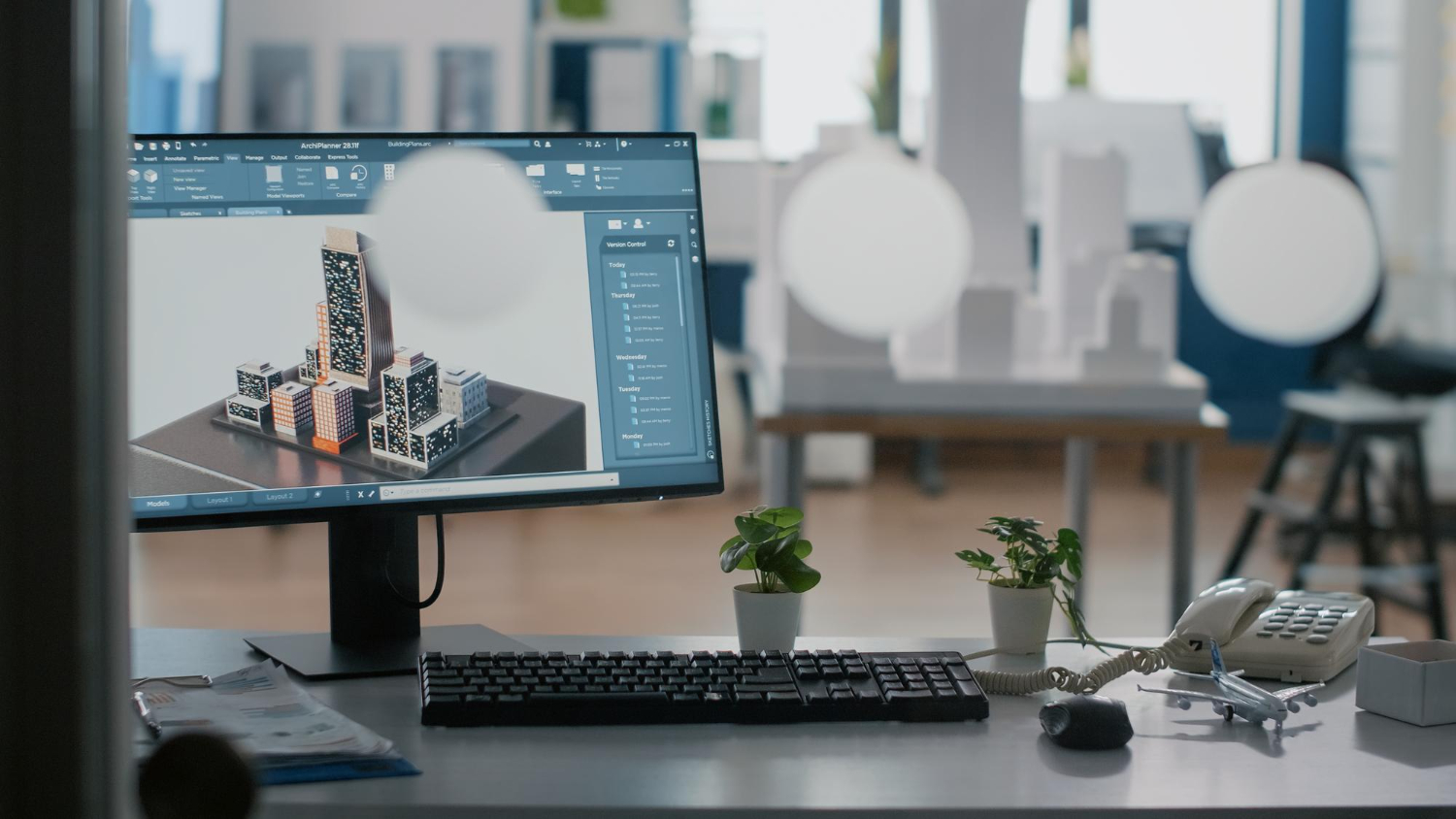
Device Installation
IoT sensors, controllers, and hardware deployed with minimal disruption.
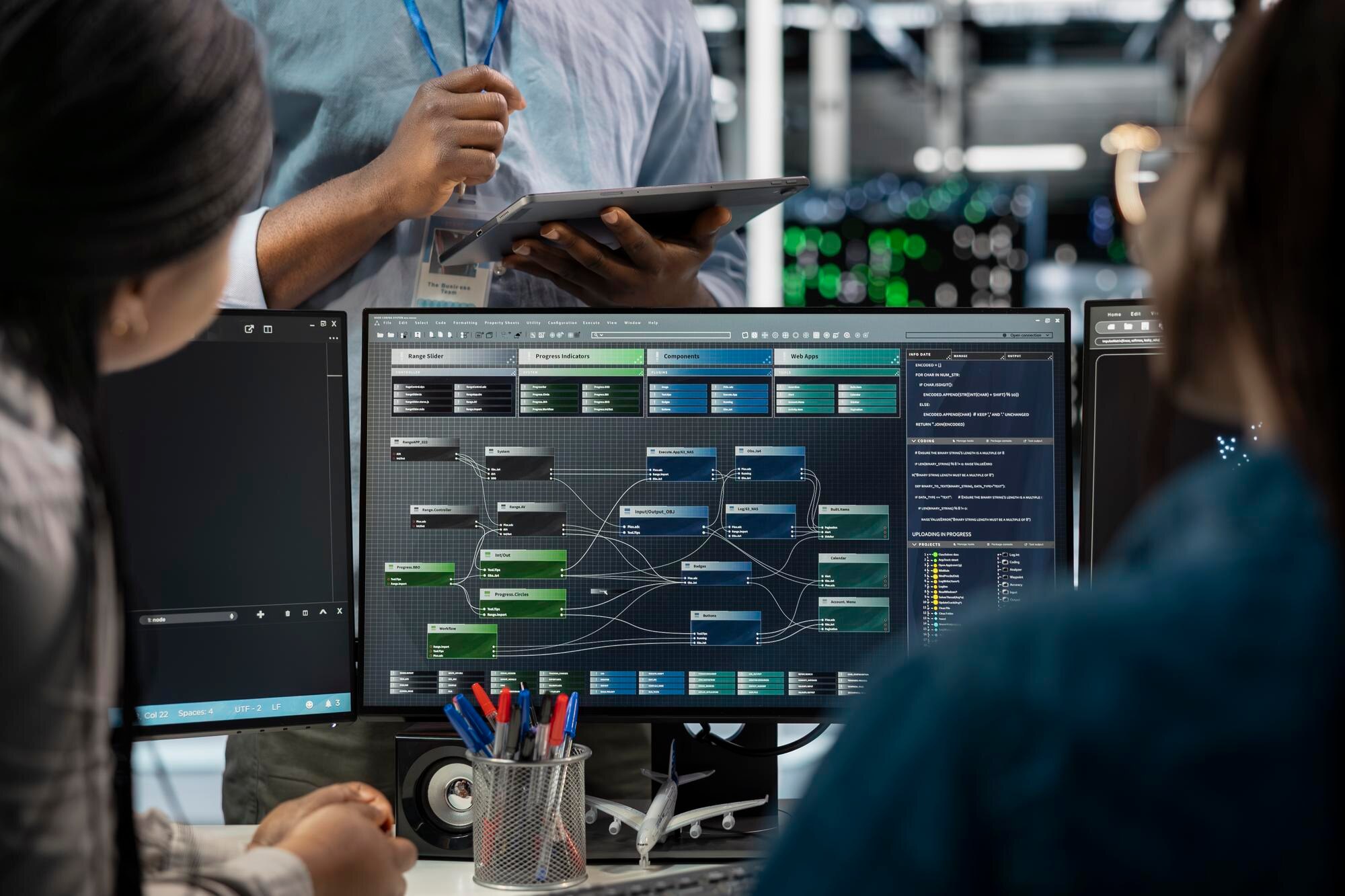
Platform Configuration
Control logic programming and system integration for centralized management.
System Commissioning
Testing, calibration, and validation to ensure reliability and accuracy.
Performance Monitoring
Continuous optimization through monitoring, analytics, and reporting.
What Sets Us Apart
WHY DYNAMIC DIMENSION
- Multi-system integration capability (HVAC, lighting, security, fire safety)
- Customized automation logic tailored to facility workflows
- Open-protocol, vendor-neutral architecture
- Cloud or on-premise deployment options
- Complete documentation, training, and AMC support
- Real-time monitoring with mobile and desktop access
15+ Years


We are growing with happy clients
FAQ
Frequently Asked Questions
We install AV systems for conference rooms, boardrooms, auditoriums, training rooms, and large commercial spaces. Each setup is designed based on the specific size, usage, and technical requirements of the space. Both single-room and multi-zone deployments are handled end-to-end.
Yes, we integrate video conferencing systems into both new and existing room setups without full redesigns. This includes cameras, microphones, displays, and wireless content sharing as needed. The result is a clean, functional collaboration environment.
We offer HD/4K flat panels, LED video walls, and high-lumen projection systems depending on your space and use case. Our team assesses the environment before recommending the right display technology. The goal is optimal visual performance for the long term.
We design the full system architecture before installation so every component audio, video, and control is compatible from the start. Post-installation, we configure, calibrate, and test the entire setup. Centralized AV control ensures everything operates as one unified system.
Yes, our lifecycle support covers scheduled maintenance, remote diagnostics, and on-site assistance. We ensure your audio video solutions continue performing reliably well beyond the installation date. You get a long-term support partner, not just a one-time installer.
Yes, we actively collaborate with architects and designers during early-stage planning. This ensures AV infrastructure is built into the space correctly from the start. Early coordination reduces revisions and leads to a cleaner final installation.